


Agri Federations / Cooperatives
Solutions
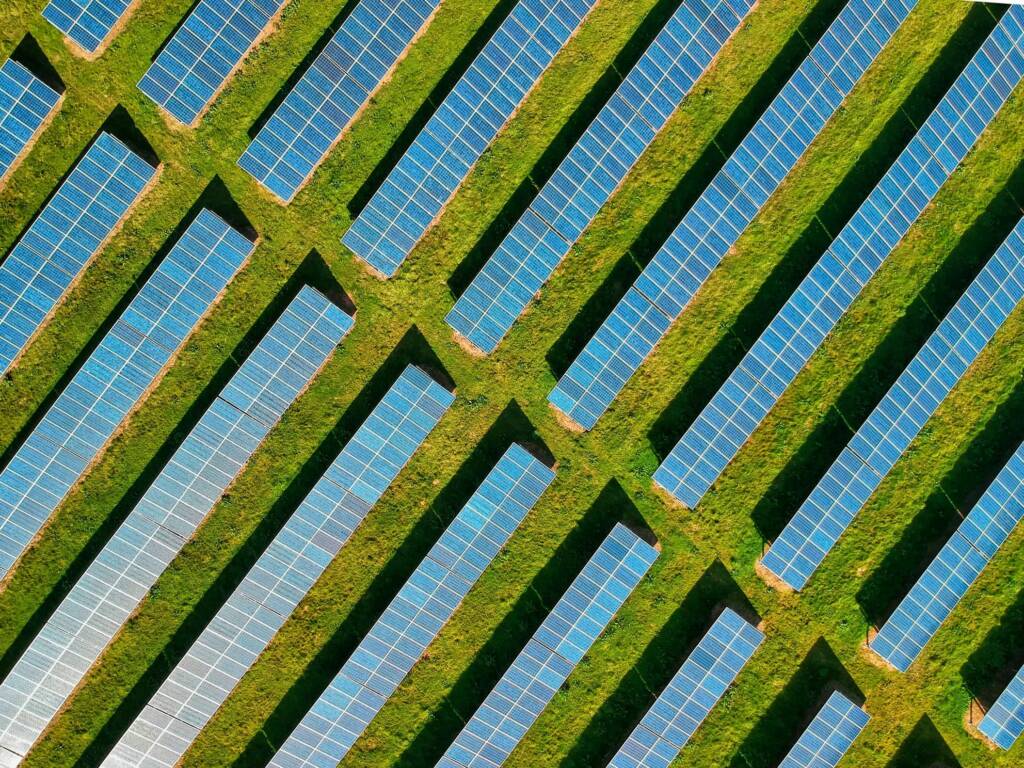
GEV’s solutions span both financial, implementation, unique solar technology, and hardware supply
Surface Solar
Vanadium Battery Power
Hybrid Solar Solutions
Hydrogen Power Solutions
Financial Services
Our Business Model
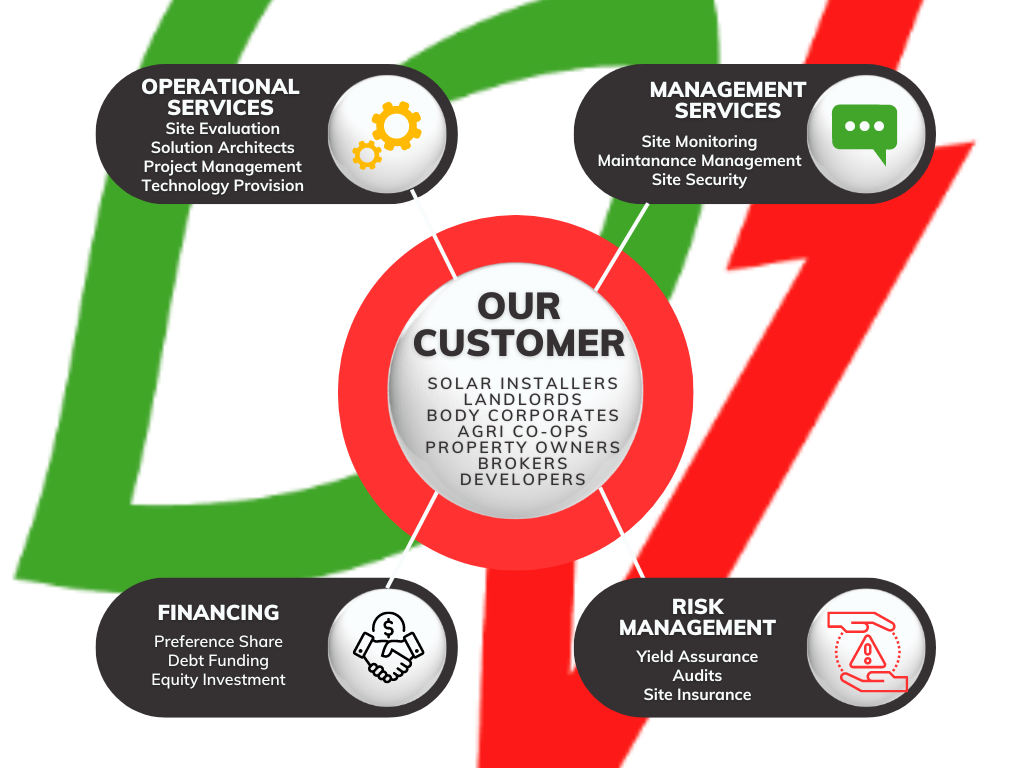
Our business model comprises four key components, integrated into a customer focussed process, and consists of; operational services, management services, financing, and risk management.
Site Evalutation
Solution Architectures
Project Management
Technology Provision
Site Monitoring
Maintenance Management
Site Security
Debt Funding
Equity Investment
Solar Funds
Cash Flow
Yield Insurance
Audits
Infra Insurance
Our Services Cycle
The GEV project development and service cycle encompasses six key standard stages from initial conception to ongoing maintenance and services.
Throughout the entire cycle, effective project management, stakeholder collaboration, and adherence to industry best practices are essential for successful solar project development and service.
As such the process encompasses carefully managing the process, from; feasibility studies, financial modeling, design and engineering, permits through approvals, to procurement and construction, and commissioning, testing, and operations.
Throughout the life cycle of the production facility regular monitoring of system performance, including energy production and equipment health, is essential to identify and address any issues promptly.
Routine maintenance tasks such as cleaning panels, inspecting electrical connections, and replacing faulty components help maximize system uptime and longevity.
Continuous monitoring of the system's performance allows for early detection of any deviations from expected output. Performance data is analyzed to identify trends and optimize system efficiency. Regular reporting to stakeholders, including investors and regulatory agencies, provides transparency and accountability.
As technology evolves and energy needs change, there may be opportunities to upgrade or expand the solar array. This could involve retrofitting with advanced components, adding energy storage capabilities, or increasing capacity to meet growing demand.
Eventually, the solar project reaches the end of its operational life. Proper decommissioning involves safely removing equipment, recycling materials, and restoring the site to its original condition. This ensures environmental responsibility and prepares the site for future use or redevelopment.
Throughout the entire cycle, effective project management, stakeholder collaboration, and adherence to industry best practices are essential for successful solar project development and service.
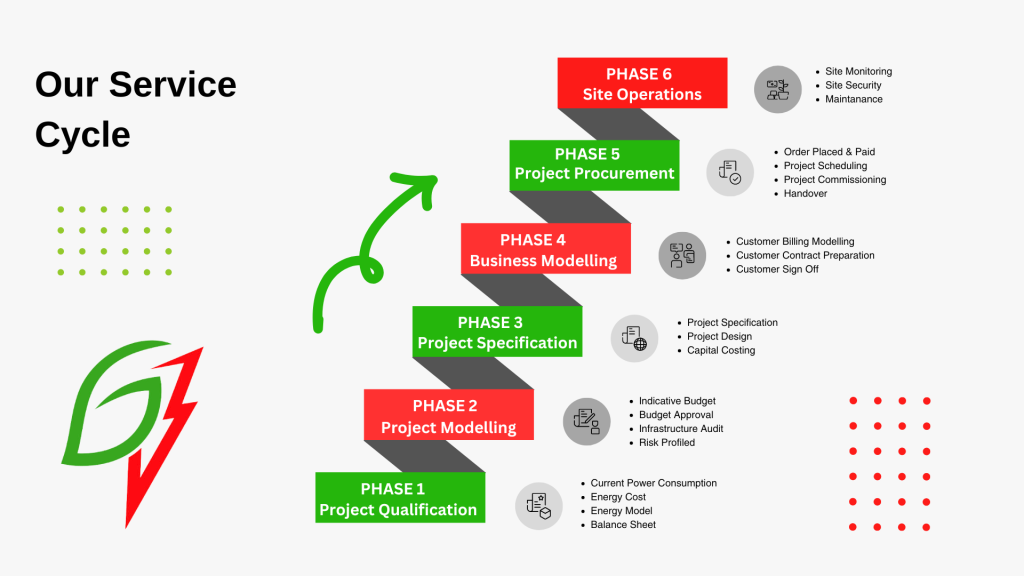
Project Qualification
Current Power Consumption
Power Cost
Power Model
Balance Sheet
Project Modelling
Indicative Budget
Budget Accepted
Infrasturcure Audit
Risk Profiled
Project Specification
Project Specification
Project Design
Capital & Project Costing
Billing Modelling
Customer Billing Modelling
Customer Contract Prepared
Customer Sign Off
Project Procurement
Orders Placed
Orders Paid
Project Scheduled
Project Commissioned
Handover
Site Operations
Site Monitoring
Site Security
Maintenance
Our Services Cycle
The GEV project development and service cycle encompasses six key standard stages from initial conception to ongoing maintenance and services.
Throughout the entire cycle, effective project management, stakeholder collaboration, and adherence to industry best practices are essential for successful solar project development and service.
As such the process encompasses carefully managing the process, from; feasibility studies, financial modeling, design and engineering, permits through approvals, to procurement and construction, and commissioning, testing, and operations.
Throughout the life cycle of the production facility regular monitoring of system performance, including energy production and equipment health, is essential to identify and address any issues promptly.
Routine maintenance tasks such as cleaning panels, inspecting electrical connections, and replacing faulty components help maximize system uptime and longevity.
Continuous monitoring of the system's performance allows for early detection of any deviations from expected output. Performance data is analyzed to identify trends and optimize system efficiency. Regular reporting to stakeholders, including investors and regulatory agencies, provides transparency and accountability.
As technology evolves and energy needs change, there may be opportunities to upgrade or expand the solar array. This could involve retrofitting with advanced components, adding energy storage capabilities, or increasing capacity to meet growing demand.
Eventually, the solar project reaches the end of its operational life. Proper decommissioning involves safely removing equipment, recycling materials, and restoring the site to its original condition. This ensures environmental responsibility and prepares the site for future use or redevelopment.
Throughout the entire cycle, effective project management, stakeholder collaboration, and adherence to industry best practices are essential for successful solar project development and service.